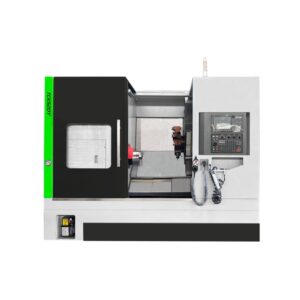
Crankshaft Manufacturing Solutions
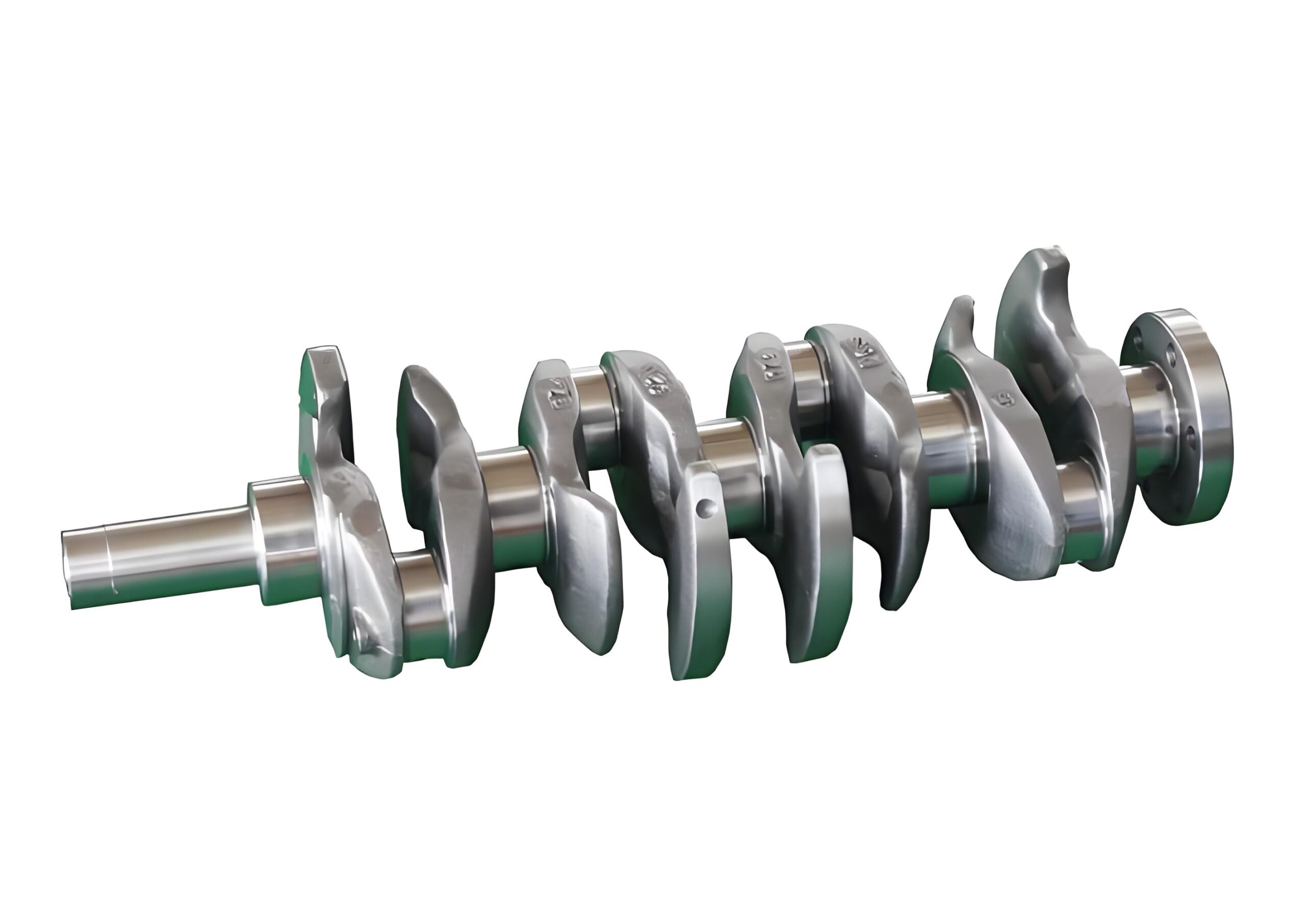
Crankshafts are the core components of engines, responsible for converting reciprocating motion of pistons into rotational motion, directly affecting engine power output, vibration control, and reliability.
Common Customer Challenges
- Difficult to control machining deformation of large crankshafts, unstable coaxiality between main journals and connecting rod journals
- Complex geometric shapes (crank arms, balance weights) have complex machining processes and difficult tool path optimization
- High-strength materials (alloy steel, nodular cast iron) have severe work hardening and rapid tool wear
- Extremely high dynamic balance requirements, difficult to control unbalance and vibration suppression
- Surface strengthening treatments (nitriding, induction hardening) have difficult layer depth and hardness uniformity control
- Complex batch production quality control, lack of effective inspection and traceability methods
Crankshaft Technology Insights


Crankshaft Milling: External vs Internal Process Comparison
Since the 1980s, China has gradually introduced CNC milling technology in the crankshaft processing field. Initially, three processes were mainly used: CNC turning, CNC internal milling, and CNC turn-broaching to


Crankshaft Flange Center Hole Precision Machining Guide
As a core component of automotive powertrain systems, engine performance directly affects overall vehicle operating quality. The crankshaft, as a key transmission component, has dimensional accuracy and surface machining quality
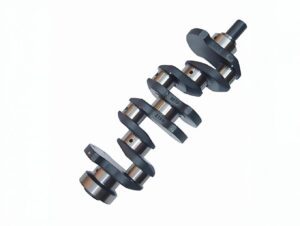

Crankshaft Oil Passageway Deep Hole Drilling Process Guide
As a core component of automotive engines, the crankshaft plays a key role in converting the reciprocating motion of pistons into rotational motion. To reduce friction loss between connecting rods
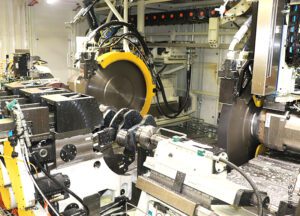

IATF 16949 Crankshaft Automated Production Line
IATF 16949, as the authoritative quality management standard in the automotive industry, serves the entire lifecycle of automotive-related components from design, production to assembly. Based on the core framework of
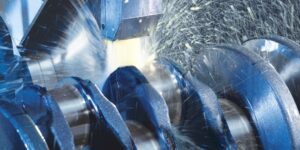

Crankshaft Following Grinding Technology: Principles, Processes, and Applications
With the continuous improvement of requirements for crankshaft processing accuracy and efficiency in the automotive industry, crankshaft following grinding technology, as the third-generation grinding process, is gradually replacing traditional manual


Crankshaft High-Speed External Milling Guide
Driven by the demand for high-efficiency and high-precision machining, crankshaft manufacturing is shifting from traditional turning-based routes to high-speed external milling solutions. This article reviews the essentials of crankshaft structures,


Brake Disc Laser Cladding: Complete Guide
Introduction: The Future of Brake Disc Manufacturing In recent years, international companies such as TRUMPF and EMAG have successively launched new processes for brake disc laser cladding coatings, and domestic
Manufacturing Solutions
Automotive Crankshafts
- Program Points: Forging → Rough machining → Heat treatment → Precision machining → Balancing → Crack Detection → Surface treatment
- Key Process: High-volume production, tight tolerances, cost optimization, automotive standards compliance


Industrial Engine Crankshafts
- Program Points: Casting/Forging → Machining → Heat treatment → Precision grinding → Balancing → Crack Detection → Coating
- Key Process: Heavy-duty applications, extended service life, reliability under harsh conditions
Marine Engine Crankshafts
- Program Points: Forging → Machining → Heat treatment → Precision finishing → Balancing → Crack Detection →Corrosion protection
- Key Process: Corrosion resistance, high load capacity, marine environment compatibility


High-Performance Racing Crankshafts
- Program Points: Precision forging → CNC machining → Heat treatment → Precision grinding → Dynamic balancing → Surface enhancement
- Key Process: Lightweight design, high RPM capability, extreme precision, racing specifications
Crankshaft Manufacturing Process
Process step description: Verify alloy grade, thickness, surface quality and heat treat condition; sample chemistry and mechanical properties. Equipment: Optical spectrometer, universal testing machine, CMM, ultrasonic thickness gauge, hardness tester, metallographic microscope.
- Process step description: Prepare forging billets or casting molds to achieve proper grain flow and material distribution for crankshaft blanks.
- Equipment:Forging equipment, hydraulic press, casting equipment, heating furnace, temperature monitoring system.
- Process step description: Remove excess material and establish basic geometry using high-efficiency roughing operations with proper fixturing.
- Equipment: CNC turning center, milling machine,
drilling machine,
machining center, roughing tools, precision fixtures.
Process step description: Apply solution treatment, aging or stress relief to achieve target mechanical properties and dimensional stability. Equipment: Heat treatment furnace, aging furnace, stress relief furnace, temperature monitoring system, atmosphere control. Heat treatment furnace, aging furnace, stress relief furnace, temperature monitoring system, atmosphere control.
- Process step description: Machine main journals,crankpin journals, and fillets to specified dimensions and surface quality requirements.
- Equipment: CNC turning center, precision grinding machine, CBN grinding wheels, CMM, surface roughness tester,machining center, polishing machine, laser marking machine
.
- Process step description: Perform dynamic balancing to eliminate vibration and achieve specified balance quality grade.
- Equipment: Dynamic balancing machine, balance correction equipment, vibration analyzer, balance weights.
Process step description: Apply anodizing, primer coating or specialized surface treatments for corrosion resistance and paint adhesion. Equipment: Anodizing line, coating booth, curing oven, surface preparation system, thickness gauge.
Process step description: Verify dimensional accuracy, surface profile and geometric tolerances using advanced metrology equipment. Equipment: CMM, laser tracker, 3D scanner, surface profilometer, coordinate measuring arm.
Process step description: Conduct final quality checks, generate inspection reports and prepare documentation for airworthiness certification. Equipment: Visual inspection station, documentation system, barcode printer, quality management software.
Process step description: Apply protective packaging and shipping preparation to prevent damage during transportation and storage. Equipment: Protective packaging system, shipping fixtures, environmental monitoring, handling equipment.
- Process step description: Maintain complete traceability of materials, processes and inspections for airworthiness compliance and quality control.
- Equipment: MES, data acquisition system, quality management system, barcode/RFID system, document management.
Crankshaft Production Line
Production Line Layout And Configuration
- Overall Layout: U-shaped layout to minimize material handling distance and optimize production flow
- Section Division: Material Preparation Area → Forging/Casting Section → Rough Machining Section → Heat Treatment Section → Precision Machining Section → Balancing Section → Surface Treatment Section → Inspection Section → Packaging Area
- Logistic Passage: Main Passage Width 5 meters, Auxiliary Passage 3 meters, to ensure smooth passage of heavy crankshafts and equipment
- Buffer Setup: Buffer inventory is set up for 4-8 hours between each section to balance production tempo
Equipment Configuration And Automation
Forging/Casting Section Equipment Configuration
- Forming Machine: 2 sets, maximum forging force 5000 tons, forging capacity up to 500kg
- Hydraulic Press: 1 set for precision forging of complex crankshaft geometries
- Casting Equipment: 1 set for nodular cast iron crankshafts
- Automation: Automatic billet handling, temperature monitoring, forging parameter control
Rough Machining Section Equipment Configuration
- CNC Turning Centers: 4 units, maximum swing diameter 800mm, length 2000mm
- Milling Machines: 2 units for machining connecting rod journals and balance weights
- Machining Centers: 2 units for complex geometry machining
- Automation: Automatic tool change system, in-process measurement, adaptive control
Heat Treatment Section Equipment Configuration
- Heat Treatment Furnace: 2 sets, capacity 2m×1m×1m, temperature control ±5°C
- Induction Hardening Machine: 1 set for selective hardening of journals
- Tempering Furnace: 1 set for stress relief and hardness adjustment
- Automation: Automatic loading system, temperature curve control, atmosphere monitoring
Balancing Section Equipment Configuration
- Dynamic Balancing Machine: 2 units, balance quality grade G2.5, maximum weight 500kg
- Balance Correction Equipment: Automatic drilling and weight addition systems
- Vibration Analyzer: Real-time vibration monitoring and analysis
- Automation: Automatic balance correction, data recording, quality gates
Production Flow And Material Handling
- Material Flow: Raw materials → Forging/Casting → Rough machining → Heat treatment → Precision machining → Balancing → Crack Detection →Surface treatment → Inspection → Packaging
- Information Flow: Order information → Process parameters → Quality data → Traceability information
- AGV System: 8 AGVs, automatic handling of crankshafts between work sections
- Crane System: Overhead cranes for heavy crankshaft handling and positioning