
Engine Cylinder Block and Cylinder Head Manufacturing Solutions
Common Customer Challenges
- Complex geometry machining with tight bore spacing, deck flatness and coolant/oil passage requirements
- Material variations (cast iron, aluminum, hybrid) require different machining strategies and tooling
- Bore finish quality, roundness and surface texture critical for piston ring sealing and oil consumption
- Heat treatment distortion control and residual stress management affecting dimensional stability
- Assembly fit‑up and leak testing requirements with strict quality gates
- High‑volume production with mixed materials and variants requiring flexible manufacturing systems
Manufacturing Solutions
Cylinder Block Manufacturing
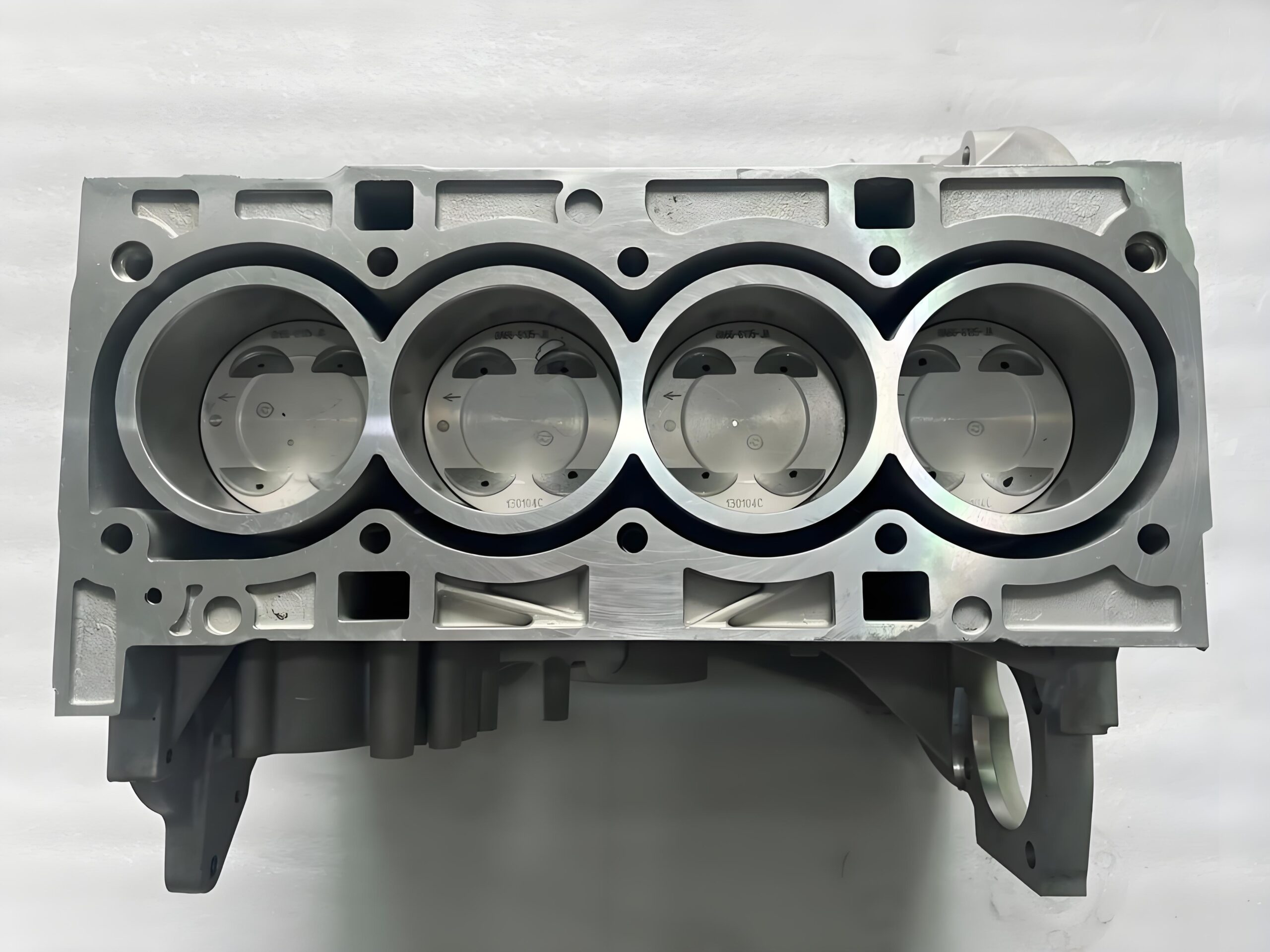
- Program Points: Bore spacing accuracy, deck flatness, main bearing bore alignment, coolant/oil gallery machining, weight optimization.
- Key Process: Casting/forging → Rough machining → Heat treatment → Precision machining → Bore finishing → Surface treatment → Assembly.
- Success Case: 4‑cylinder aluminum block, bore spacing ±0.02 mm, deck flatness ≤0.02 mm/1000 mm, weight reduction 15%, FPY 99.2%.
Cylinder Head Manufacturing
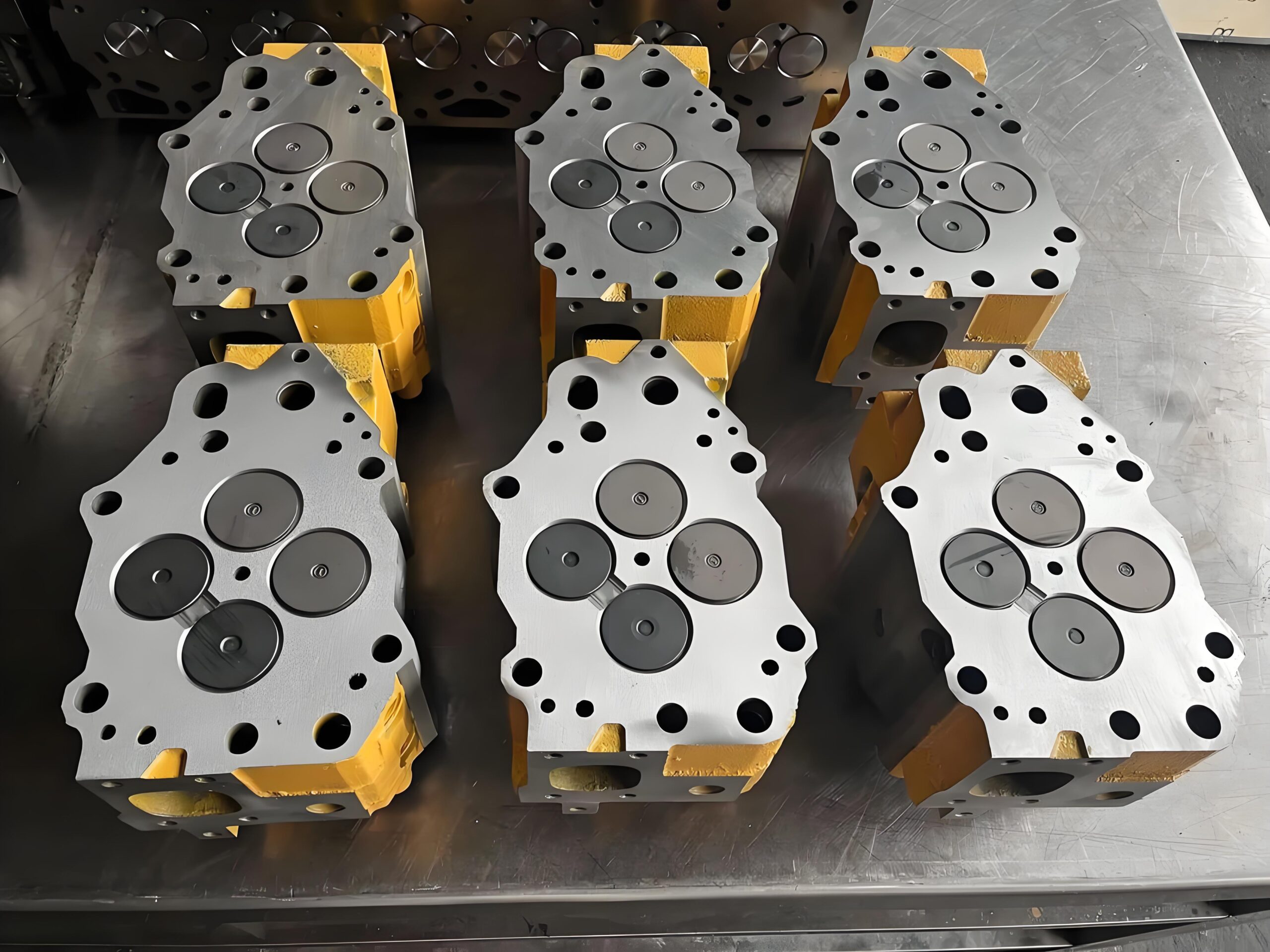
- Program Points: Valve seat/guide machining, combustion chamber geometry, coolant passages, gasket surface flatness.
- Key Process: Casting → Rough machining → Heat treatment → Precision machining → Valve seat/guide → Surface treatment → Assembly.
- Success Case: DOHC aluminum head, valve seat runout ≤0.01 mm, combustion chamber volume ±0.5%, leak test pass rate 99.8%.
Hybrid Block/Head Assemblies
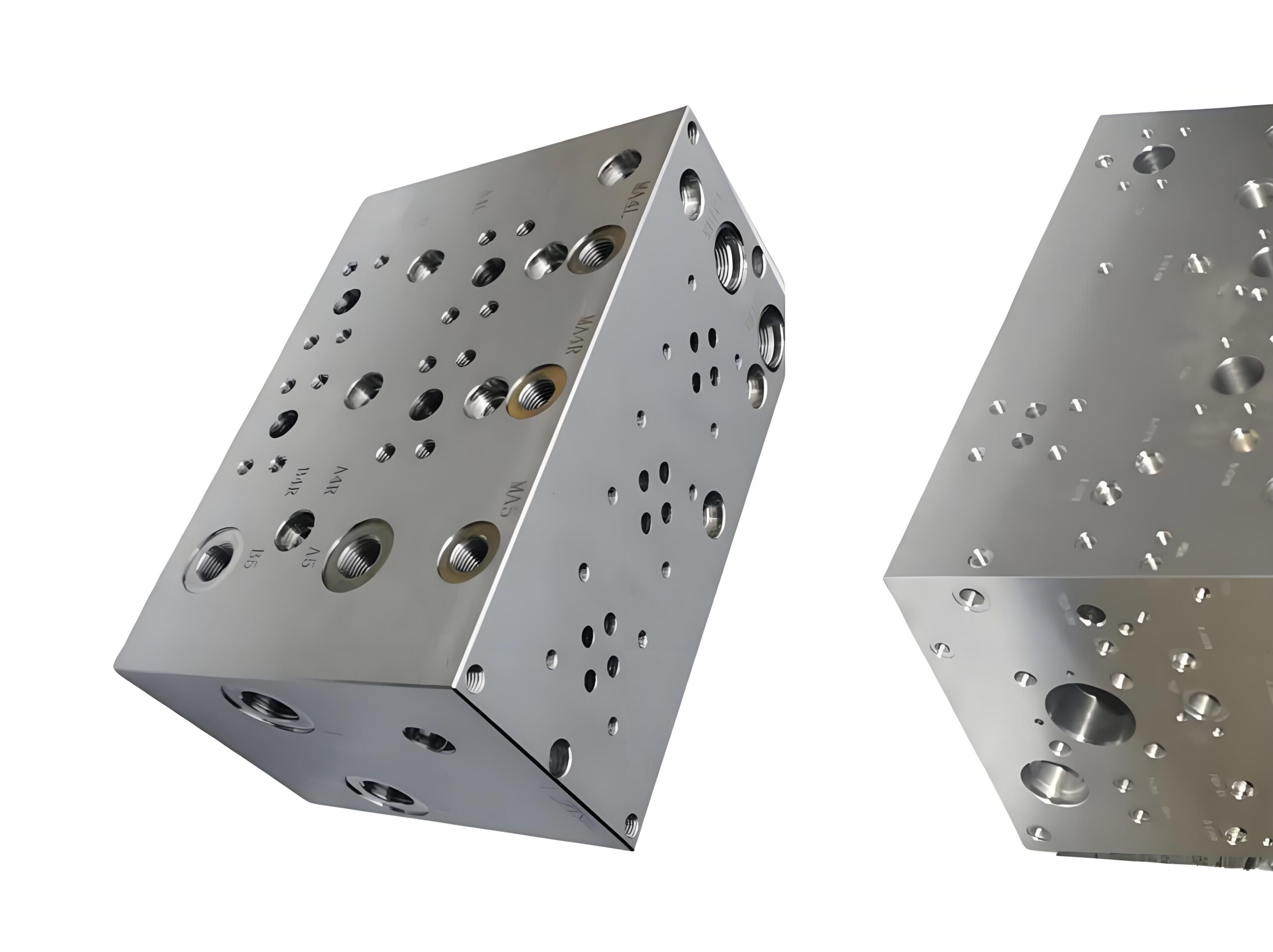
- Program Points: Dissimilar material joining, thermal expansion management, sealing interface control, assembly torque sequences.
- Key Process: Component machining → Surface prep → Controlled assembly → Leak testing → Final validation.
- Success Case: Iron block/aluminum head assembly, thermal cycling stability, gasket seal integrity, warranty claims −30%.
High‑Performance Engine Components
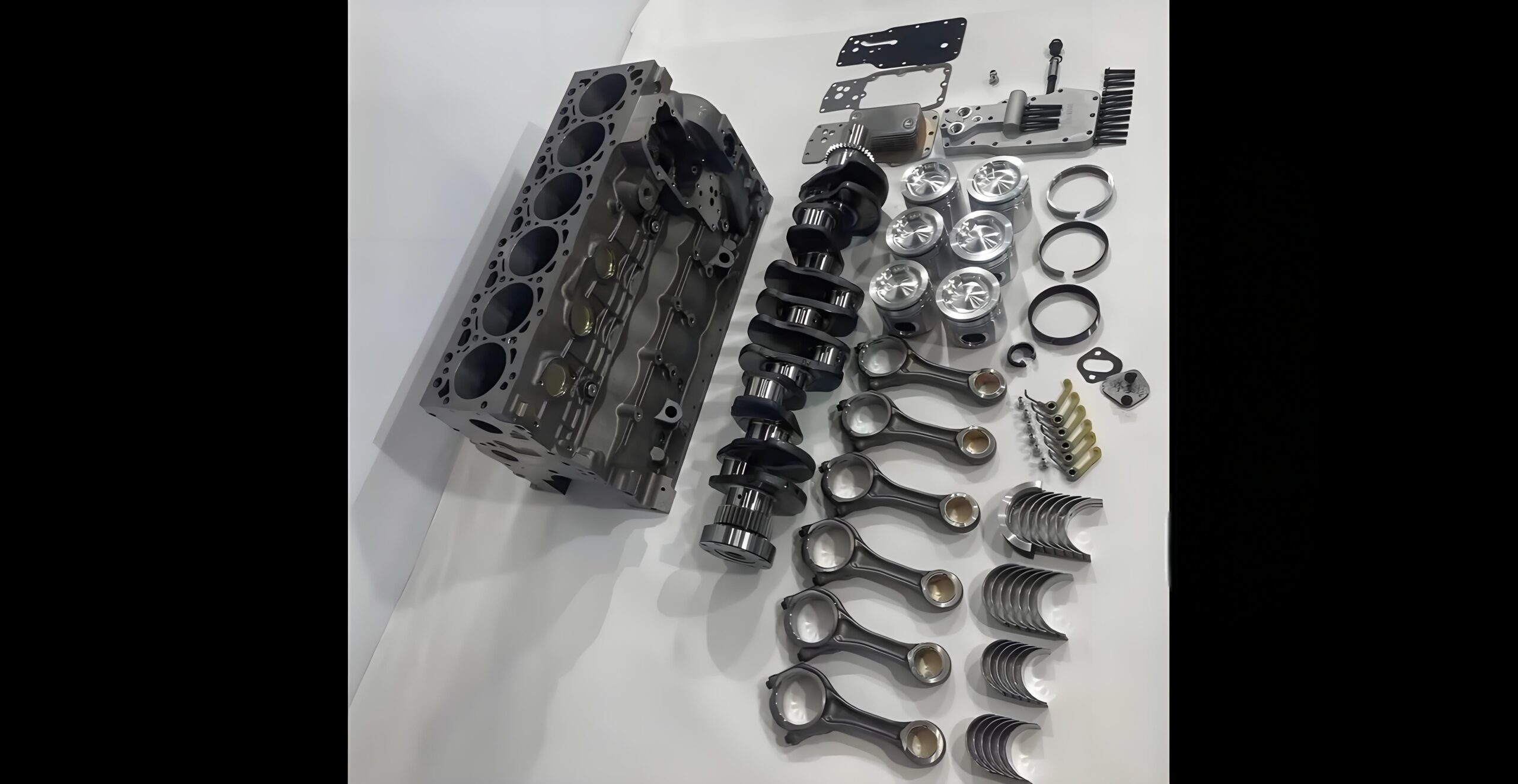
- Program Points: Lightweight design, high‑strength materials, precision bore finishing, advanced surface treatments.
- Key Process: Precision casting/forging → Advanced machining → Surface engineering → Assembly → Performance validation.
- Success Case: Racing engine block, weight −25%, bore finish Ra≤0.1 μm, power density +20%, reliability under extreme conditions.
Engine Cylinder Block and Cylinder Head Manufacturing Process
Raw Materials And Incoming Materials Inspection
- Process step description: Verify cast iron/aluminum grades, casting quality, dimensions and surface defects; sample chemistry and mechanical properties.
- Equipment: Optical spectrometer, universal testing machine, CMM, ultrasonic flaw detector, hardness tester, metallographic microscope.
Casting/Forging Preparation And Cleaning
- Process step description: Clean castings/forgings, remove risers/flash and establish reference datums for machining operations.
- Equipment: Shot blaster, swing frame grinder, cleaning line, reference machining center, CMM.
Rough Machining And Stock Removal
- Process step description: Remove excess material and establish basic geometry using high‑efficiency roughing with proper fixturing.
- Equipment: CNC milling machine, machining center, roughing tools, precision fixtures, chip evacuation systems.
Heat Treatment And Stress Relief
Process step description: Apply solution treatment, aging or stress relief to achieve target mechanical properties and dimensional stability. Process step description: Apply solution treatment, aging or stress relief to achieve target mechanical properties and dimensional stability. Equipment: Heat treatment furnace, aging furnace, stress relief furnace, temperature monitoring system, atmosphere control. Heat treatment furnace, aging furnace, stress relief furnace, temperature monitoring system, atmosphere control.
Precision Machining And Bore Finishing
Process step description: Machine critical features, bores, decks and passages to specified dimensions and surface quality requirements. Equipment: 5-axis machining center, CNC drilling machine, edge trimming machine, countersinking machine, CMM.
Valve Seat And Guide Machining (Heads)
- Process step description: Machine valve seats and guides with precise angles, depths and surface finish for optimal sealing.
- Equipment: Valve seat/guide machining center, precision boring machine, reaming machine, angle measurement system.
Surface Treatment And Coating
Process step description: Apply shot peening, coatings or specialized treatments for wear resistance and corrosion protection. Equipment: Shot peening machine, coating booth, curing oven, surface preparation system, thickness gauge.
Assembly And Fit‑Up
- Process step description: Assemble components with controlled torque sequences and verify fit‑up and clearances.
- Equipment: Assembly fixtures, torque wrenches, feeler gauges, assembly test rigs, measurement systems.
Leak Testing And Quality Control
- Process step description: Perform coolant/oil leak tests and dimensional verification to ensure quality and performance.
- Equipment: Leak test bench, pressure testing system, CMM, visual inspection station, quality gates.
Final Inspection And Documentation
Process step description: Conduct final quality checks, generate inspection reports and prepare documentation for airworthiness certification. Equipment: Visual inspection station, documentation system, barcode printer, quality management software.
Packaging And Shipping
Process step description: Apply protective packaging and shipping preparation to prevent damage during transportation and storage. Equipment: Protective packaging system, shipping fixtures, environmental monitoring, handling equipment.
Data Traceability And Quality Control
- Process step description: Maintain complete traceability of materials, processes and inspections for airworthiness compliance and quality control.
- Equipment: MES, data acquisition system, quality management system, barcode/RFID system, document management.
Engine Cylinder Block and Cylinder Head Production Line
Production Line Layout And Configuration
- Overall Layout: Linear/U‑shaped flow by process to minimize handling and enable parallel machining of blocks and heads.
- Workstation Division: Material prep → Rough machining → Heat treat → Precision machining → Bore finishing → Surface treatment → Assembly → Testing → Packing.
- Logistic Passage: Main aisle 4–5 m, auxiliary 2.5–3 m; overhead cranes for heavy castings; AGVs for work‑in‑process.
- Buffer setup:4–8 hour WIP buffers before heat treat and precision machining to balance production tempo.
Equipment Configuration And Automation
Casting/Forging Preparation Section
- Shot blasters: 2 units, capacity 2m×1.5m×1m, automatic loading/unloading.
- Swing frame grinders: 2 units for riser/flash removal and surface preparation.
- Cleaning lines: Multi‑stage cleaning with ultrasonic and high‑pressure systems.
- Automation: Automatic loading, cleaning cycle control, quality inspection.
Rough Machining Section
- CNC milling machines: 4 units, table size 2m×1.5m, spindle power 40kW.
- Machining centers: 3 units for complex geometry and multi‑face machining.
- Roughing tools: High‑efficiency tooling with chip evacuation and coolant systems.
- Automation: Automatic tool change, in‑process measurement, adaptive control.
Heat Treatment Section
- Heat treatment furnaces: 2 units, capacity 2m×1.5m×1m, temperature control ±5°C. Stress relief furnaces: 1 unit for dimensional stability.
- Stress relief furnaces: 1 unit for dimensional stability.
- Aging furnaces: 1 unit for aluminum components.
- Automation: Automatic loading, temperature curve control, atmosphere monitoring.
Surface Treatment Section
- Shot peening machines: 2 units for stress relief and surface hardening.
- Coating booths: 1 unit for specialized coatings and treatments.
- Surface preparation systems: Cleaning and preparation for coating.
- Automation: Automatic loading, process control, quality monitoring.
Production Flow And Material Handling
- Material Flow: Raw castings/forgings → Preparation → Rough machining → Heat treat → Precision machining → Bore finishing → Surface treatment → Assembly → Testing → Packing.
- Information Flow: Order information → Process parameters → Quality data → Traceability information.
- AGV System: 12 AGVs for automatic handling between workstations.
- Crane system: Overhead cranes for heavy casting handling and positioning.


