Solutions
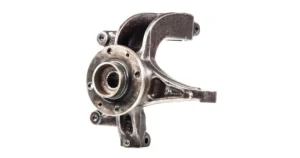
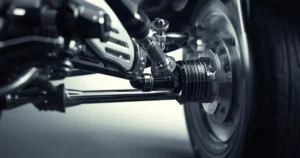
- Overview: For engine, chassis, braking and transmission system parts, taking into account PPAP and large-volume consistency
- Customer Challenge: Complex hole system and coaxiality, hardened layer stability, cleanliness and leakage test, beat/OEE
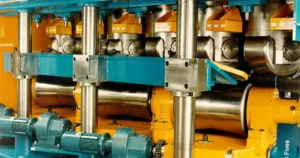
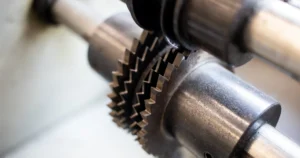
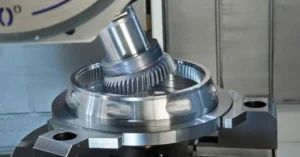
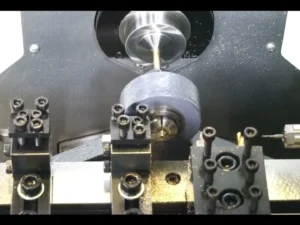
- Typical Processes: Milling/grinding integrated unit, spline/keyway broaching, scroll milling to form screw rods, fine grinding after heat treatment, laser quenching of easy-to-wear surfaces, automatic deburring and cleaning.
- Recommended Equipment: Whirling Machine ,Broaching Machine,Grinding Machine,Laser Hardening,Straightening,Surface Finishing,Turning/Milling Cell
- Quality Indicators: CPK ≥1.33; Surface roughness Ra≤0.8 μm (axis/piston rod), tooth error grade DIN 6-8; hardened layer depth 0.8-1.5 mm
- Case Examples: Chassis connecting rod batch production of 300,000 pieces per year, SPC Cpk ≥ 1.33, rework rate -35%
- ROI: Automated deburring + cleaning line combination, cost per piece -8-12%.


Power System Parts Processing


Braking System Parts Processing


Chassis System Parts Processing


Transmission System Processing
- Overview: High-precision production line for machine tools/automotive ball screws and linear guides, focusing lead error and linearity control.
- Process (Screws): Material preparation → rough turning → heat treatment → vortex milling and forming → fine grinding/polishing → straightening → cleaning and rust prevention → full inspection.
- Processes (Guide Rails):Reference face milling → Drilling/tap → Heat treatment → Guide surface precision grinding → Laser quenching hardening → Super precision.
- Recommended Equipment:Whirling Machine,Grinding Machine,Straightening Machine,Laser Hardening,Surface Finishing Machine
- Quality Indicators:Lead error ≤±8 μm/300 mm; straightness ≤0.02 mm/1000 mm; surface Ra≤0.2 μm
- Overview: Compound machining and cleaning control for gearbox housing, gears and shafts.
- Typical Processes:Shell pentahedral machining and hole system coaxiality control, soft cutting of tooth blanks → heat treatment → hardened tooth grinding and dressing, shaft spline broaching and cylindrical fine grinding, leakage testing and cleanliness (residual particles)
- Recommended Equipment: Milling/Turning Center、Broaching Machine、Grinding Machine、Surface Finishing、Leak Test
- Quality Indicators: Tooth direction/tooth profile deviation DIN 6–7; housing hole position ≤0.02 mm; cleanliness ≤200 mg/1000 cm²
- Overview: High-precision production line for machine tools/automotive ball screws and linear guides, focusing lead error and linearity control.
- Process (Screws): Material preparation → rough turning → heat treatment → vortex milling and forming → fine grinding/polishing → straightening → cleaning and rust prevention → full inspection.
- Processes (Guide Rails):Reference face milling → Drilling/tap → Heat treatment → Guide surface precision grinding → Laser quenching hardening → Super precision.
- Recommended Equipment:Whirling Machine,Grinding Machine,Straightening Machine,Laser Hardening,Surface Finishing Machine
- Quality Indicators:Lead error ≤±8 μm/300 mm; straightness ≤0.02 mm/1000 mm; surface Ra≤0.2 μm
- Overview: Meets the requirements of high mixing and high reliability of small batches of aviation parts, covering five-axis processing and repair of complex surfaces of titanium/nickel-based alloys
- Process (Screws): 5-axis linkage processing → on-machine measurement → grinding and refining → laser cladding repair/wear-resistant coating → deburring and surface quality control → full process traceability
- Recommended Equipment:5-Axis Machining Center、Grinding Machine、Laser Cladding、Surface Finishing、Straightening
- Quality Indicators:Dimension tolerance ±0.01 mm grade, surface Ra≤0.4 μm
- Overview: Taking the rotor/stator, pump shell and impeller for petrochemical/chemical industry as the core, emphasizing efficiency and corrosion resistance and wear resistance.
- Process : Rotor vortex milling and forming → heat treatment → precision grinding → straightening; pump housing five-axis processing → sealing surface grinding; laser cladding wear-resistant layer in key areas
- Recommended Equipment:Whirling Machine、Grinding Machine、Straightening、Laser Cladding、Turning/Milling
- Quality Indicators:Rotor profile error ≤±10 μm, coaxiality ≤0.01 mm, surface Ra≤0.4 μm
- Overview: Integrated solution for valve body/bonnet/stem/valve seat, focusing on sealing surface quality and hardened layer durability
- Process :Valve body casting processing → Sealing surface grinding/grinding → Keyway broaching → Valve seat/spool laser cladding hard surface → Pressure/seal testing
- Recommended Equipment:Broaching Machine、Grinding Machine、Laser Cladding、Surface Finishing、Turning/Milling
- Quality Indicators:Sealing surface Ra≤0.2 μm, hard surface layer HV≥55 HRC equivalent, corrosion resistance salt spray≥72 h
- Overview: For cutting tools and medical drills and other rod tools, emphasizing straightness and cutting edge quality
- Process :Blank grinding → Heat treatment → Fine grinding and blunt cutting → Straightening (slim parts) → Coating → Full inspection
- Recommended Equipment:Grinding Machine、Straightening Machine、Surface Finishing
- Quality Indicators:Straightness ≤0.01 mm/300 mm, controllable edge burrs, Ra≤0.1 μm


Automotive Gearbox Planetary Gear Ring Broaching Solution
1.What is Planetary Gear Ring Gear Planetary gear ring gear is one of the core components in automatic transmission AT, dual-clutch transmission DCT, hybrid/electric vehicle reduction mechanism, and belongs to the key components of planetary gear set. It together with the sun wheel and planetary wheel constitute a planetary gear mechanism, which realizes multi-gear speed


Broaching Machine Solutions for Splines and Face Teeth Processing of Nosing Fork Parts
Introduction Flange Yoke is a key connection component in the automotive drivetrain, mainly used for the connection and power transmission of universal joint drive shafts (such as drive shafts and half shafts). It is fixed with the gearbox, transfer case or axle at one end by a flange (nosture), and connected to the drive shaft


Power Tool Injection Molding Handle Processing Solution
Under the trend of power tools developing in the direction of humanization, lightweight, and weather resistance, injection molding, as the core technology of handle processing, has become the mainstream choice for power tool handle production with its advantages of efficient mass production, flexible modeling, and controllable cost. The use scenarios, grip requirements and performance requirements


Crankshaft Nitriding vs Induction Hardening: A Comparison
Crankshafts operate under high alternating loads, torsional vibration, and cyclic bending. Because fatigue cracks often initiate at or near the surface (especially around fillets and oil hole edges), the heat treatment route directly affects durability, reliability, and downstream manufacturing cost. In the crankshaft world, two mainstream surface hardening routes are widely used: This article compares the two


Steering Ball Joint Heat Treatment Process Guide
Heat treatment is a key process link in steering ball joint manufacturing, directly affecting material mechanical properties and product service life. In the global automotive industry, heat treatment processes must comply with international standards to ensure product quality meets IATF 16949 quality management requirements. This article systematically introduces the heat treatment process of steering ball joints from


Steering Ball Joint Basics: Complete Manufacturing Guide
The automotive steering system is the core of vehicle control. Steering ball joints and connecting rods, as key components, bear the important responsibilities of transmitting driver control intentions and ensuring driving safety. In the global automotive industry, the quality and performance of steering ball joints directly affect vehicle handling, safety, and service life. This article


Crankshaft Milling: External vs Internal Process Comparison
Since the 1980s, China has gradually introduced CNC milling technology in the crankshaft processing field. Initially, three processes were mainly used: CNC turning, CNC internal milling, and CNC turn-broaching to process main journals and connecting rod journals. With the iterative upgrading of machine tools and cutting tools, crankshaft high-speed external milling process emerged and quickly
Powder Metallurgy Solutions: MIM vs PM for Power Tools
Under the trend of power tools developing towards precision, lightweight, and long life, Metal Injection Molding (MIM) and traditional Powder Metallurgy (PM, pressing-sintering process) as two mainstream powder metallurgy technologies play irreplaceable roles in different component production with their respective process characteristics. This article systematically reviews their applicable scenarios, core advantages and disadvantages, and cost


Complete Bolt Production and Processing Solution
Bolts, as core fasteners for mechanical connections, have processing accuracy that directly determines assembly reliability and structural safety. This solution covers the complete process from raw materials to finished products, clearly defining operation procedures, accuracy indicators, and control measures for each process link, suitable for batch production of M3–M48 specification bolts from grade 4.8 to