Crankshaft

Crankshaft Milling: External vs Internal Process Comparison

Crankshaft Milling: External vs Internal Process Comparison

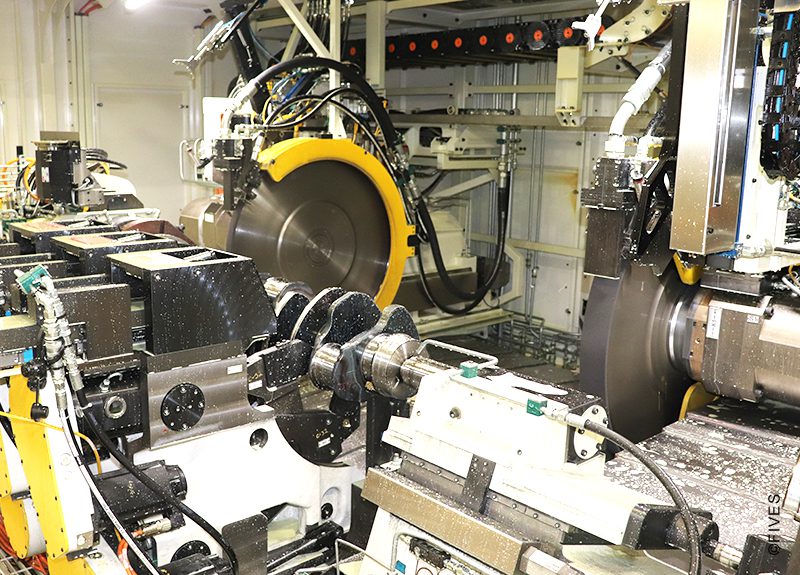
Crankshaft milling uses either an internal ring cutter with inward-facing cutting edges or an external disc cutter with outward-facing cutting edges. Both can machine crankpin journals. The choice depends on cutter access, workpiece support, cutting conditions and the cost of producing an accepted crankshaft. Neither process name establishes a universal advantage in accuracy or cost.

Crankshaft Milling: External vs Internal Process Comparison Read More »

Crankshaft Flange Center Hole Precision Machining Guide

Crankshaft Flange Center Hole Precision Machining Guide

As a core component of automotive powertrain systems, engine performance directly affects overall vehicle operating quality. The crankshaft, as a key transmission component, has dimensional accuracy and surface machining quality of its journals that not only relate to crankshaft operating smoothness but also directly affect component wear rates and noise control levels. The crankshaft center

Crankshaft Flange Center Hole Precision Machining Guide Read More »

Marine Engine Crankshafts

Crankshaft Oil Passageway Deep Hole Drilling Process Guide

As a core component of automotive engines, the crankshaft plays a key role in converting the reciprocating motion of pistons into rotational motion. To reduce friction loss between connecting rods and journals and extend component life, oil passageways are designed on main journals to import and export engine oil for effective lubrication. However, deep hole

Crankshaft Oil Passageway Deep Hole Drilling Process Guide Read More »

IATF 16949 Crankshaft Automated Production Line

IATF 16949 Crankshaft Automated Production Line

IATF 16949, as the authoritative quality management standard in the automotive industry, serves the entire lifecycle of automotive-related components from design, production to assembly. Based on the core framework of this standard and combined with crankshaft processing characteristics, this article systematically elaborates on a complete IATF 16949 compliant crankshaft automated production line solution, covering process

IATF 16949 Crankshaft Automated Production Line Read More »

Crankshaft Following Grinding Technology: Principles, Processes, and Applications

Crankshaft Following Grinding Technology: Principles, Processes, and Applications

Crankshaft following grinding is a CNC method for grinding the off-center pin journals of a crankshaft while the part turns about its own main-journal axis. Instead of moving each pin onto the machine's rotation center with an eccentric fixture, the control links the workpiece rotation (C axis) with the transverse feed of the wheelhead (X

Crankshaft Following Grinding Technology: Principles, Processes, and Applications Read More »

Crankshaft High-Speed External Milling Guide

Crankshaft High-Speed External Milling Guide

Crankshaft high-speed external milling is a CNC roughing process in which a large disc milling cutter, turning on an axis parallel to the crankshaft, cuts the main journals, crankpins and web faces while the crankshaft itself rotates slowly. The cutting speed comes from the cutter, not from the workpiece. Because the crankshaft is driven as

Crankshaft High-Speed External Milling Guide Read More »

Brake Disc Laser Cladding: Complete Guide

Brake Disc Laser Cladding: Complete Guide

Introduction: The Future of Brake Disc Manufacturing In recent years, international companies such as TRUMPF and EMAG have successively launched new processes for brake disc laser cladding coatings, and domestic laser equipment integrators have quickly followed suit, developing proprietary solutions with independent intellectual property rights. This technology can significantly improve the high-temperature wear resistance and

Brake Disc Laser Cladding: Complete Guide Read More »

Scroll to Top

Get In Touch With Us!