
The automotive steering system is the core of vehicle control. Steering ball joints and connecting rods, as key components, bear the important responsibilities of transmitting driver control intentions and ensuring driving safety. In the global automotive industry, the quality and performance of steering ball joints directly affect vehicle handling, safety, and service life. This article systematically introduces the manufacturing solution for steering ball joints from dimensions of fundamentals, material selection, manufacturing processes, and quality control.
1. Steering Ball Joint Fundamentals
1.1 Structural Principles and Working Principles
If the automotive steering system is compared to a human arm, then the steering ball joint is the “wrist” connecting the arm and palm. Its core capability is to achieve multi-angle flexible transmission while buffering road impacts.
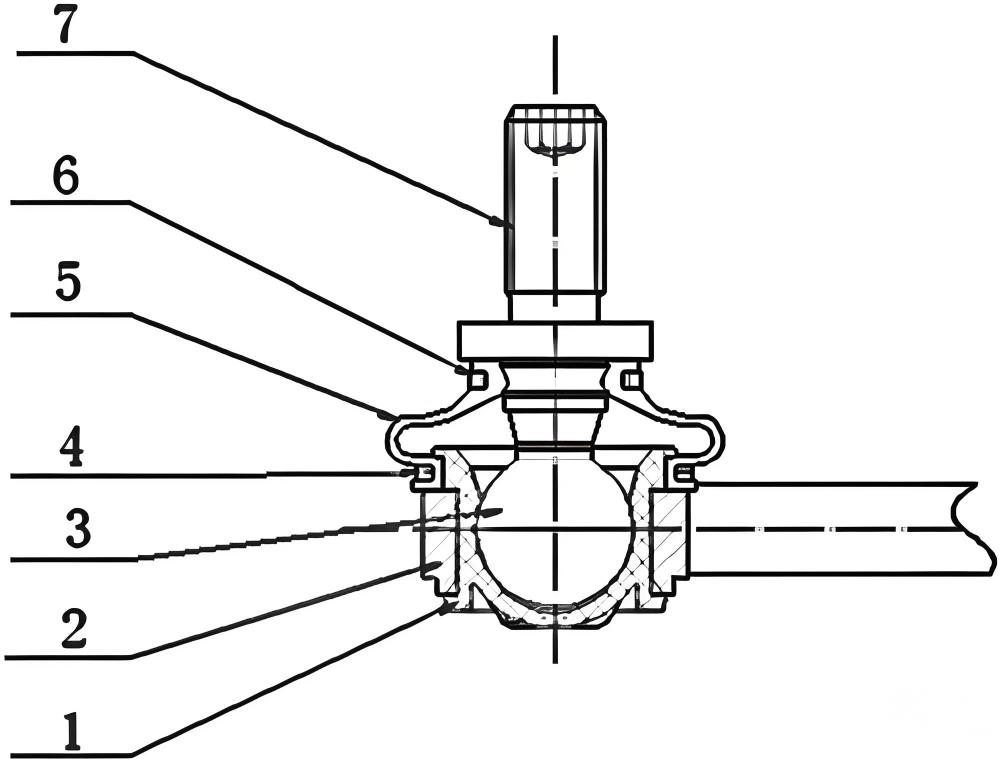
Structural Components:
- Ball Pin: Made of high-strength alloy steel, bears main loads
- Ball Socket: Made of engineering plastic or copper alloy, provides support and lubrication
- Dust Boot: Protects internal structure, prevents dust and moisture entry
- Lubricating Grease: Reduces friction, extends service life
Working Principle:
During vehicle operation, wheels not only turn with the steering wheel but also jump up and down due to road bumps. This requires a connecting component that can simultaneously adapt to both “steering” and “jumping” movements—the steering ball joint is exactly suited for this. It is installed at the connection between steering knuckle and tie rod, adopting a “ball head + ball socket” structural design. The ball head can rotate freely 360° within the ball socket.
Working Process:
- When the driver turns the steering wheel, steering force is transmitted to the ball joint through the transmission mechanism. The ball joint drives the steering knuckle to rotate, ultimately achieving wheel deflection
- When wheels encounter bumps and jump, the ball joint can resolve impact forces through its own rotation, avoiding direct transmission of vibration to the steering wheel, making steering smoother and preventing “sticking” or “play” from occurring
1.2 Technical Requirements and International Standards
Steering ball joints must meet strict technical requirements to ensure safe and reliable performance:
International Standards:
- ISO 9001: Quality management system standard
- ISO/TS 16949: Automotive industry quality management standard
- SAE J492: Ball joint performance standard
- DIN 71800: German industrial standard
- IATF 16949: International Automotive Task Force quality management standard
Technical Requirements:
| Technical Parameter | Requirement | International Standard |
|---|---|---|
| Ball Head Roundness | < 0.005 mm | ISO 1101 |
| Surface Roughness | Ra 0.02–0.1 μm | ISO 4287 |
| Fit Clearance | 0.02–0.05 mm | SAE J492 |
| Fatigue Life | ≥ 1 million cycles | SAE J492 |
| Wear Amount (100,000 km) | ≤ 0.1 mm | ISO/TS 16949 |
1.3 Application Scenarios
Steering ball joints are widely used in various vehicles:
- Passenger Vehicles: Sedans, SUVs, MPVs, etc.
- Commercial Vehicles: Trucks, buses, etc.
- New Energy Vehicles: Electric vehicles, hybrid vehicles
- Special Vehicles: Construction machinery, agricultural machinery, etc.
1.4 Safety Importance
The reliability of steering ball joints is directly related to driving safety. If the ball joint is severely worn or becomes loose, it can lead to:
- Heavy Steering Wheel: Increased steering resistance
- Slow Steering Response: Reduced handling performance
- Dangerous Situation: “Steering wheel turns but wheels barely move”, seriously affecting driving safety
Therefore, “checking steering ball joint clearance” is an essential item in automotive maintenance, complying with IATF 16949 quality management requirements.
2. Material Selection Fundamentals
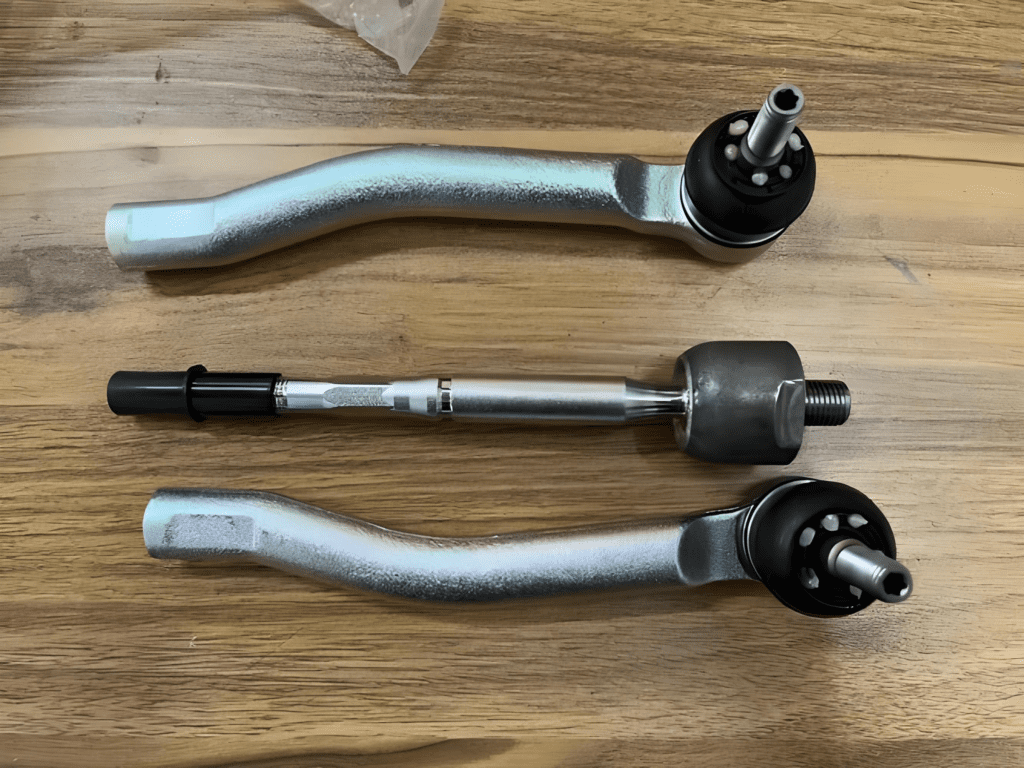
2.1 Ball Pin Material Types
The “ball pin” of steering ball joints needs to withstand repeated friction and impact, so high-strength alloy steel must be used:
International Standard Materials:
- AISI 4140 (equivalent to 40Cr): After heat treatment, can achieve very high hardness and toughness, suitable for standard vehicles
- AISI 4142 (equivalent to 42CrMo): Has higher strength and wear resistance, suitable for premium vehicles
- AISI 4340: Ultra-high strength material, suitable for high-performance vehicles
Material Performance Requirements:
| Material Type | Hardness (HRC) | Tensile Strength (MPa) | Application Scenario | International Standard |
|---|---|---|---|---|
| AISI 4140 | 45–50 | ≥ 800 | Standard vehicles | SAE J403 |
| AISI 4142 | 48–52 | ≥ 900 | Premium vehicles | SAE J403 |
| AISI 4340 | 50–55 | ≥ 1000 | High-performance vehicles | SAE J403 |
2.2 Ball Socket Material Types
Ball sockets need both wear resistance and friction reduction, usually using:
- Polyoxymethylene (POM): Engineering plastic with good friction reduction, complies with ISO 16396 standard
- Copper Alloy: Good wear resistance, can provide certain lubrication, complies with ASTM B16 standard
- Composite Materials: New materials with excellent comprehensive performance
2.3 Material Performance Comparison
| Material Type | Wear Resistance | Friction Reduction | Cost | Application Scenario |
|---|---|---|---|---|
| POM | Medium | Excellent | Low | Standard applications |
| Copper Alloy | Excellent | Good | Medium | Premium applications |
| Composite Materials | Excellent | Excellent | High | Special applications |
2.4 Material Selection Principles
Material selection needs to consider the following factors:
- Performance Requirements: Select appropriate materials according to application scenarios
- Cost Control: Control costs while meeting performance requirements
- International Standards: Comply with relevant international standard requirements
- Environmental Requirements: Comply with environmental regulations and sustainable development requirements
3. Manufacturing Process Overview

3.1 Process Flow
The manufacturing of steering ball joints follows the complete process of “Forging → Precision Machining → Surface Treatment → Assembly“:
- Material Preparation: Select materials complying with international standards
- Forging: Form basic shape
- Precision Machining: Achieve accuracy requirements
- Surface Treatment: Improve corrosion resistance
- Assembly: Complete final product
- Inspection: Ensure quality meets standards
3.2 Forging Process
First, blanks are made through forging process. This process makes the internal structure of steel more compact, improving overall strength. Forging process needs to comply with ISO 9001 quality management requirements.
3.3 Precision Machining Process
Rod Machining:
Process the rod through CNC turning and machining methods. Tolerance must be controlled within ±0.01 mm, complying with ISO 2768 standard.
Ball Socket and Ball Head Fit:
The fit clearance between ball socket and ball head must be precisely 0.02–0.05 mm:
- Clearance too large: Play occurs, affecting steering precision
- Clearance too small: Affects rotation flexibility
Ball Head Machining:
Usually, ball head roundness requirement is less than 0.005 mm, surface roughness requirement is Ra 0.02–0.1 μm, complying with ISO 1101 and ISO 4287 standards.
Advanced Process Solution:
Now using specialized spherical surface processing equipment can complete spherical surface processing and extrusion in one step, ensuring true roundness and surface roughness of the spherical surface. Precision is maintained for a long time with low adjustment and maintenance costs.
3.4 Surface Treatment
Surface treatment processes include:
- Phosphating: Improves corrosion resistance, complies with ISO 9717 standard
- Galvanizing: Enhances rust resistance, complies with ISO 2081 standard
- Coating: Improves wear resistance, complies with ISO 12944 standard
3.5 Assembly Process
Assembly process needs to ensure:
- Assembly Accuracy: Meets design requirements
- Assembly Quality: Passes quality inspection
- Assembly Efficiency: Improves production efficiency
4. Quality Control Fundamentals
4.1 International Inspection Standards
Quality control of steering ball joints needs to comply with the following international standards:
- ISO 9001: Quality management system
- ISO/TS 16949: Automotive industry quality management
- SAE J492: Ball joint performance standard
- IATF 16949: International Automotive Task Force quality management
4.2 Inspection Methods
Material Inspection:
- Ultrasonic Testing: Check for internal cracks in blanks, complies with ISO 17640 standard
- Magnetic Particle Testing: Ensure materials are defect-free, complies with ISO 9934 standard
Dimensional Inspection:
- Roundness Inspection: Use roundness tester, complies with ISO 1101 standard
- Roughness Inspection: Use roughness tester, complies with ISO 4287 standard
Performance Testing:
- Fatigue Testing: Steering ball joints must undergo over 1 million fatigue cycle tests, complies with SAE J492 standard
- Environmental Adaptability Testing: Test at -40℃ to 120℃, complies with ISO 16750 standard
4.3 Quality Control Key Points
| Inspection Item | Inspection Standard | Qualification Standard | International Standard |
|---|---|---|---|
| Ball Head Roundness | < 0.005 mm | Meets requirements | ISO 1101 |
| Surface Roughness | Ra 0.02–0.1 μm | Meets requirements | ISO 4287 |
| Fit Clearance | 0.02–0.05 mm | Meets requirements | SAE J492 |
| Fatigue Cycles | ≥ 1 million | No damage | SAE J492 |
| Wear Amount (100,000 km) | ≤ 0.1 mm | Meets requirements | ISO/TS 16949 |
Only products that pass all these tests can be installed for use, complying with IATF 16949 quality management requirements.
5. Technology Development Trends
5.1 Lightweighting Trend
With the automotive industry transitioning to new energy and intelligence, the manufacturing of steering ball joints and connecting rods is also continuously upgrading.
Lightweight Material Applications:
- Aluminum Alloy: Reduces component weight by 30%–40% while ensuring strength, reducing vehicle energy consumption
- Composite Materials: Further improves lightweighting effect, reduces weight by 40%–50%
Lightweighting Effects:
| Material Type | Weight Comparison | Strength Retention | Application Scenario |
|---|---|---|---|
| Traditional Steel | Baseline | 100% | Traditional vehicles |
| Aluminum Alloy | Reduced by 30%–40% | ≥ 90% | New energy vehicles |
| Composite Materials | Reduced by 40%–50% | ≥ 85% | Premium vehicles |
5.2 Intelligence Trend
Intelligent Inspection Systems:
- Online Inspection: Real-time monitoring of processing quality
- Data Traceability: Full-process quality data recording, complies with IATF 16949 requirements
- Predictive Maintenance: Early detection of equipment problems
Intelligent Manufacturing:
- Automated Production Lines: Improve production efficiency
- Robotic Assembly: Ensure assembly precision
- Digital Management: Achieve full-process digitalization, complies with Industry 4.0 standards
5.3 Future Development Directions
In the future, these technologies will gradually become popular, making automotive steering systems safer and more intelligent:
- Higher Precision: Ball head roundness requirements further improved to < 0.003 mm
- Longer Life: Fatigue cycle requirements higher to ≥ 2 million cycles
- More Lightweight: New materials more widely applied
- More Intelligent: Intelligent manufacturing technology more mature
- More Environmental: Comply with environmental regulations and sustainable development requirements
6. Summary
Steering ball joints, as core components of automotive steering systems, have manufacturing processes and quality control directly related to driving safety. Through the use of high-strength alloy steel materials, precision machining processes, and strict quality control systems, high precision, high reliability, and long life of steering ball joints can be ensured.
With the automotive industry transitioning to new energy and intelligence, the manufacturing of steering ball joints is also continuously upgrading. The application of lightweight materials and intelligent manufacturing technology will further improve product quality and production efficiency.
For comprehensive steering system manufacturing solutions, including complete production line planning from raw materials to finished products, equipment selection, and process optimization, we recommend referring to professional Steering System Manufacturing Solutions or Technical Consulting services. To learn more about processing equipment or customized solutions, please visit UBright Solutions or Contact Us.