
Under the trend of power tools developing towards precision, lightweight, and long life, Metal Injection Molding (MIM) and traditional Powder Metallurgy (PM, pressing-sintering process) as two mainstream powder metallurgy technologies play irreplaceable roles in different component production with their respective process characteristics. This article systematically reviews their applicable scenarios, core advantages and disadvantages, and cost differences in the power tool field from the perspective of process essence.
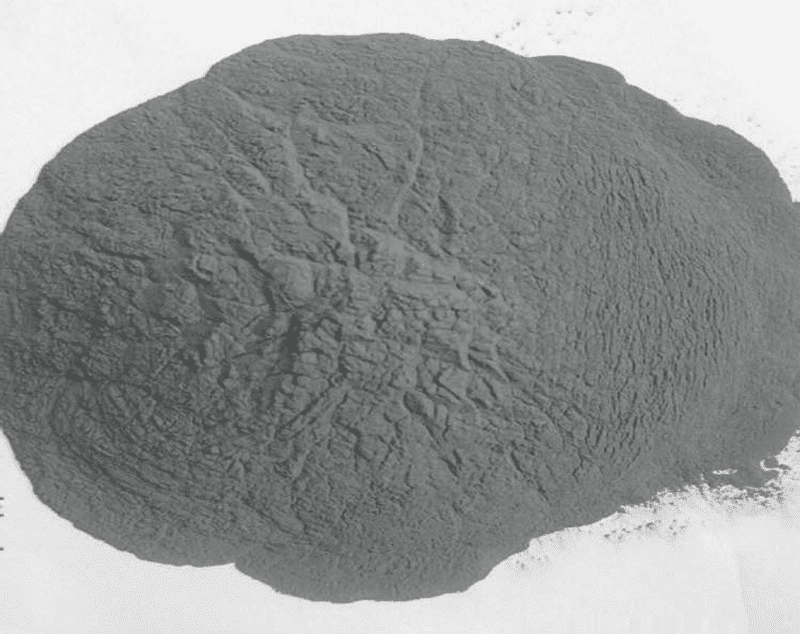
MIM chromium-molybdenum alloy steel powder
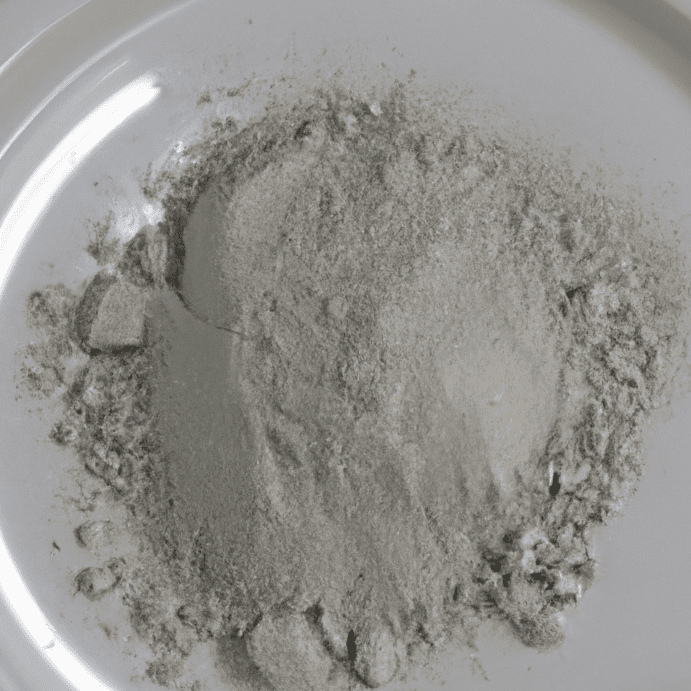
PM ferrochrome powder
1. Process Essence: Core Definitions and Differences of MIM and PM
Although MIM and PM both belong to the powder metallurgy technology category, they have significant differences in process principles, raw material requirements, and core characteristics. These differences directly determine their applicable boundaries in power tool component production.
1.1 Metal Injection Molding (MIM): Forming Tool for Precision Complex Parts
Metal Injection Molding (MIM) is a near-net-shape technology that deeply integrates plastic injection molding technology with powder metallurgy technology.
Core Process Route:
Mix fine metal powder of 2–15 μm (such as Fe-Ni-Mo pre-alloyed powder, stainless steel powder) with organic binders (paraffin, polyethylene, etc.) uniformly to make thermoplastic feedstock, inject into precision molds through injection machine under 130–200℃, 50–150 MPa conditions to form green parts, remove binders through solvent debinding or catalytic debinding (residual ≤ 0.1%), then heat to 70%–90% of metal melting point in vacuum or protective atmosphere for sintering densification, finally obtaining high-precision parts.
Core Advantages:
The core advantage of this process lies in its “fluid forming” characteristic, which can eliminate powder distribution unevenness, achieving product density of 95%–98%, close to forging level, and can achieve one-time forming of complex structures such as micro-holes, threads, and thin walls.
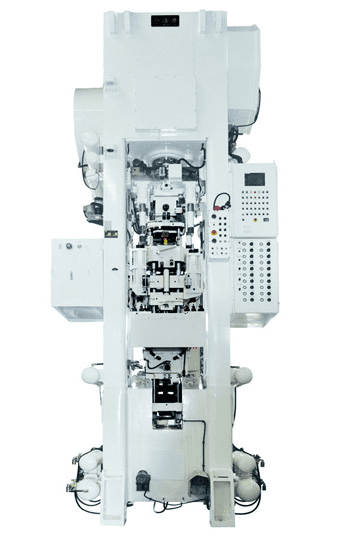
1.2 Traditional Powder Metallurgy (PM): Mass Production Preferred for Standardized Parts
Traditional Powder Metallurgy (PM) takes “pressing-sintering” as the core and is the most mature powder metallurgy technology.
Process Route:
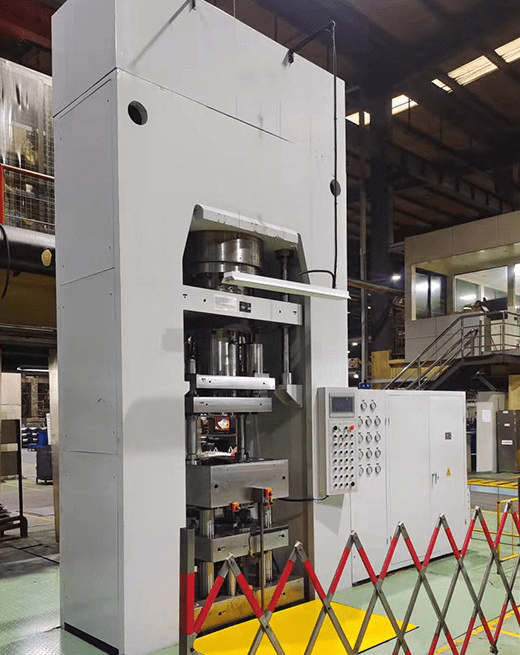
Fill coarser metal powder of 50–100 μm directly into molds, press into green parts through mechanical or hydraulic pressure (10–50 MPa) (mainly cold pressing), no debinding step required, directly sinter in protective atmosphere furnace to obtain finished products.
Process Characteristics:
Due to friction between mold walls and powder during pressing, green part density distribution is prone to unevenness, resulting in finished product density of only 80%–85% with relatively lower mechanical properties, but advantages lie in simple process and low equipment investment, especially suitable for mass production of standardized, simple structure parts.
2. Process Adaptation Solutions for Power Tool Parts
Power tool parts can be divided into three categories by function: transmission system, connection locking mechanism, and structural support parts. The structural complexity, performance requirements, and mass production scale of different parts determine the adaptation differences of MIM and PM processes.
2.1 Process Adaptation Solution Table
| Part Category | Typical Parts | Recommended Process | Core Adaptation Basis |
|---|---|---|---|
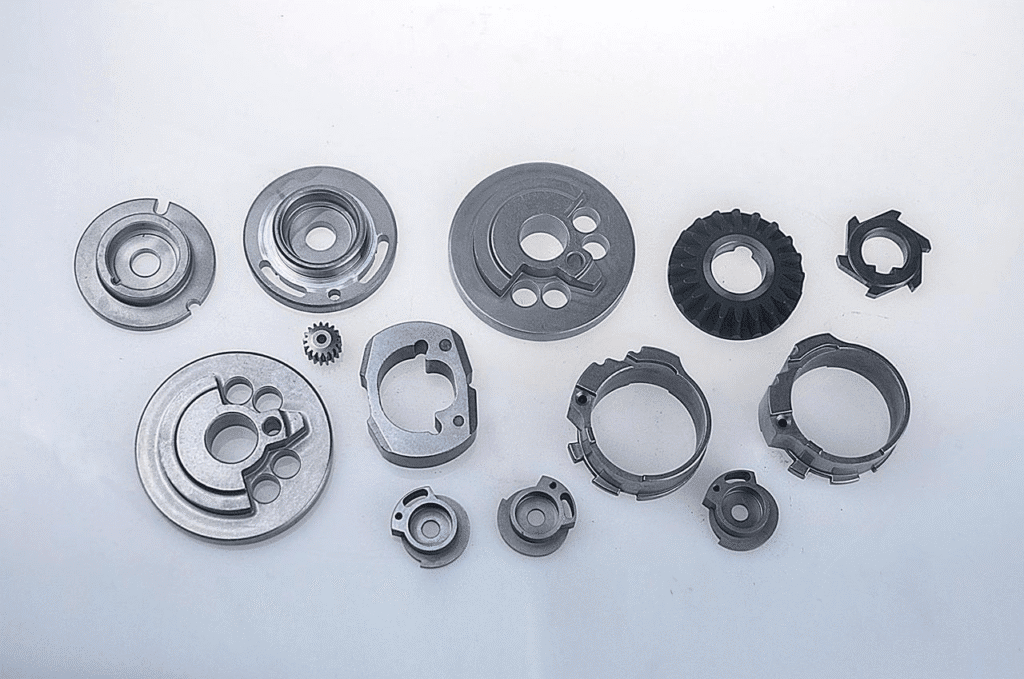
| Transmission System Parts (Core Load-bearing) | Hammer drill special gear (with spline/bushing) | MIM | “Gear+spline+bushing” integrated structure, requires high-frequency impact toughness (≥ 35 J/cm²), tooth profile accuracy GB 6–7 grade |
| Impact wrench ratchet pawl | MIM | Internal ratchet+bushing composite structure, heat treatment hardness HRC 58–62, high engagement reliability required | |
| Angle grinder ordinary spur gear | PM | Regular structure, annual production ≥ 500,000 pieces, cost priority, medium strength sufficient | |
| Hand drill planetary gear set | MIM | Thin wall (≤ 1 mm) structure, multi-gear coaxiality ≤ 0.02 mm, quiet operation required | |
| Connection Locking Mechanism Parts | Hammer drill chuck body (with internal thread) | MIM | Internal thread+external teeth composite structure, uniform torque transmission, high fatigue life required |
| Hand-tight nut (multi-step sleeve type) | PM | Simple step structure, accuracy requirement ±0.1 mm, cost sensitive | |
| Quick connector (small precision) | MIM | Miniature internal snap structure, high sealing performance and connection reliability required | |
| Structural Support Parts | Brushless motor electronic bracket | MIM | Thin wall heat dissipation fins+multiple positioning holes integrated, lightweight (40% weight reduction) |
| Gearbox housing (size > 100 mm) | PM | Large size, medium strength required, PM cost 50% lower and less prone to deformation |
3. Core Advantages and Disadvantages Comparison: Comprehensive Comparison of MIM, PM, and Traditional Turning/Milling Processes
To more clearly present process selection logic, compare MIM, PM, and traditional turning/milling processes from 6 core dimensions including forming capability, performance indicators, and production efficiency, and analyze their practical application differences combined with power tool production scenarios.
3.1 Basic Performance and Production Characteristics Comparison
| Comparison Dimension | MIM Process | PM Process | Traditional Turning/Milling Process |
|---|---|---|---|
| Forming Complexity | High (3D complex, micro-holes, thin walls) | Medium (2D simple shapes) | Medium-High (tool dependent, complex parts require multiple processes) |
| Dimensional Accuracy | ±0.1–±0.3 mm (after finishing ±0.01 mm) | ±0.5–±1 mm (after finishing ±0.05 mm) | ±0.005 mm (but poor batch consistency) |
| Density | 95%–98% | 80%–85% | 100% (forging level) |
| Material Utilization | ≥ 95% | 90%–95% | 30%–60% (high scrap rate) |
| Production Efficiency (10K batch) | High (tens of thousands per machine per day) | Very High (no debinding step, short cycle) | Low (multiple processes, long auxiliary time) |
| Equipment Investment | High (injection machine+debinding furnace+sintering furnace) | Medium (press+sintering furnace) | Medium-Low (lathe+milling machine, labor dependent) |
3.2 Key Difference Analysis in Power Tool Scenarios
Forming Capability Differences:
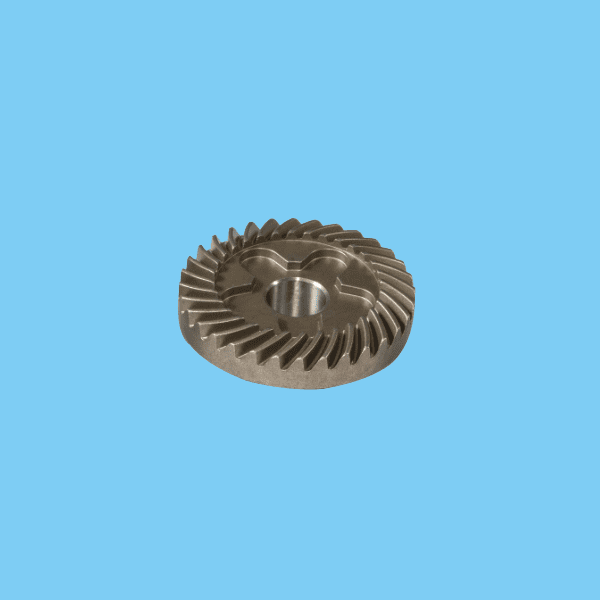
MIM can form hammer drill special gear “gear+spline+bushing” composite structure in one step, with coaxiality ≤ 0.015 mm, while PM requires separate pressing and assembly, with coaxiality error ≥ 0.03 mm, causing impact energy loss increase of 10%; traditional turning/milling requires 5–8 processes for such complex parts and cannot achieve integrated forming of thin walls and micro-holes.
Performance Adaptation Differences:
MIM parts have impact toughness ≥ 35 J/cm², can withstand industrial hammer drill 2500 times/minute high-frequency impact, life extended 2–3 times compared to PM parts; but PM’s porous structure has self-lubricating properties, superior to MIM and turning/milling parts in self-lubrication effect for parts like bearing cages.
Cost Adaptation Differences:
- For large batch (≥ 100,000 pieces) complex parts, MIM unit cost is 40% lower than turning/milling
- For small batch (< 10,000 pieces) simple parts, PM cost is only 60%–70% of MIM
- Turning/milling has advantages in small batch custom parts due to no mold investment
4. Cost Comparison: Quantitative Analysis Based on Power Tool Mass Production Scenarios
Taking power tool core parts “hammer drill gear” (weight 15 g) and “ordinary spur gear” (weight 10 g) as samples, compare unit costs and cost composition of three processes according to different production scales (10,000, 100,000, 500,000 pieces) to provide data support for production decisions.
4.1 Unit Cost Comparison (Yuan/Piece)
| Part Type | Production Scale | MIM Process | PM Process | Traditional Turning/Milling Process |
|---|---|---|---|---|
| Hammer Drill Gear (Complex) | 10,000 pieces | 8.2 | Cannot form | 12.5 |
| 100,000 pieces | 3.1 | Cannot form | 10.8 | |
| 500,000 pieces | 2.5 | Cannot form | 9.6 | |
| Ordinary Spur Gear (Simple) | 10,000 pieces | 4.8 | 2.2 | 5.1 |
| 100,000 pieces | 2.3 | 1.5 | 4.6 | |
| 500,000 pieces | 1.8 | 1.1 | 4.2 |
4.2 Cost Composition Core Characteristics
MIM Cost:
- Raw material cost accounts for 70%–80% (micron-level powder price is 2–5 times that of ordinary powder)
- Mold cost accounts for 10%–15%
- After batch ≥ 100,000 pieces, unit cost reduction reaches over 60%, scale effect significant
PM Cost:
- Raw material cost accounts for 60%–70%
- Equipment depreciation is only 50% of MIM
- No need to bear high debinding equipment costs in small batches, cost advantage prominent
Turning/Milling Cost:
- Labor and scrap costs account for over 50%
- Limited cost reduction after batch increase, only competitive in small batch simple parts
5. Summary: Core Logic and Strategy for Process Selection
5.1 Core Logic for Process Selection
MIM and PM processes are not competitive but complementary solutions of “precise matching and complementary advantages” in power tool part production:
Select Process by Structure and Accuracy:
- Complex structures (with internal threads, thin walls, special shapes), high precision (tolerance ≤ ±0.05 mm) parts prioritize MIM, such as hammer drill special gears, ratchet pawls
- Simple regular structures, medium precision parts prioritize PM, such as ordinary spur gears, bearing cages
Select Process by Batch Scale:
- Large batch (≥ 100,000 pieces) complex parts, MIM has significant cost advantages
- Small batch (< 50,000 pieces) simple parts, PM is more economical
- Small batch (< 10,000 pieces) custom parts can consider traditional turning/milling
Select Process by Product Positioning:
- High-end industrial power tools (unit price ≥ $500) prioritize MIM process to improve performance
- Household power tools (unit price ≤ $300) mainly use PM to control costs
5.2 Combination Strategy Recommendations
For power tool enterprises, it is recommended to adopt “PM+MIM” combination strategy:
- PM covers 80% of standardized basic parts
- MIM tackles 20% of core precision parts
At the same time, select quality equipment suppliers to ensure production stability, ultimately achieving optimal balance between performance and cost.
5.3 Summary
MIM and PM powder metallurgy processes each have advantages in power tool component production. MIM is suitable for high-performance requirements of complex precision parts, while PM is suitable for mass production of standardized parts at low cost. Through reasonable process selection and combination strategies, optimal balance between performance and cost can be achieved.
For comprehensive powder metallurgy solutions, including equipment selection, process optimization, and production line planning, we recommend referring to professional powder metallurgy equipment or technical consulting services. To learn more about processing equipment or customized solutions, please visit UBright Solutions or Contact Us.