
A *steel coil slitting line* is an integrated production line that turns a wide master coil into narrower steel strips and rewinds them into finished coils. For hot rolled coil, the line normally combines decoiling, leveling or feeding, slitting, tension control, and recoiling so buyers can improve width control, edge quality, coil shape, and production continuity.
For manufacturers processing hot rolled steel, the right slitting system is not only a cutting machine. It is a coordinated way to reduce manual handling, control burrs, stabilize recoiling, and prepare consistent strip widths for downstream fabrication, tube making, roll forming, automotive parts, steel structures, appliances, and metal service-center orders.
Table of Contents
- What Is Coil Slitting Equipment?
- How a Coil Slitting and Recoiling Line Works
- Why Hot Rolled Coil Needs a Heavy Gauge Steel Slitting Line
- Key Equipment Sections in an Automatic Slitting Line
- Quality Controls: Width Tolerance, Burrs, Flatness, and Coil Shape
- Buyer Pain Points the Right Steel Slitting Line Should Solve
- What to Prepare Before Asking a Slitting Equipment Manufacturer
- FAQ
- Conclusion
What Is Coil Slitting Equipment?
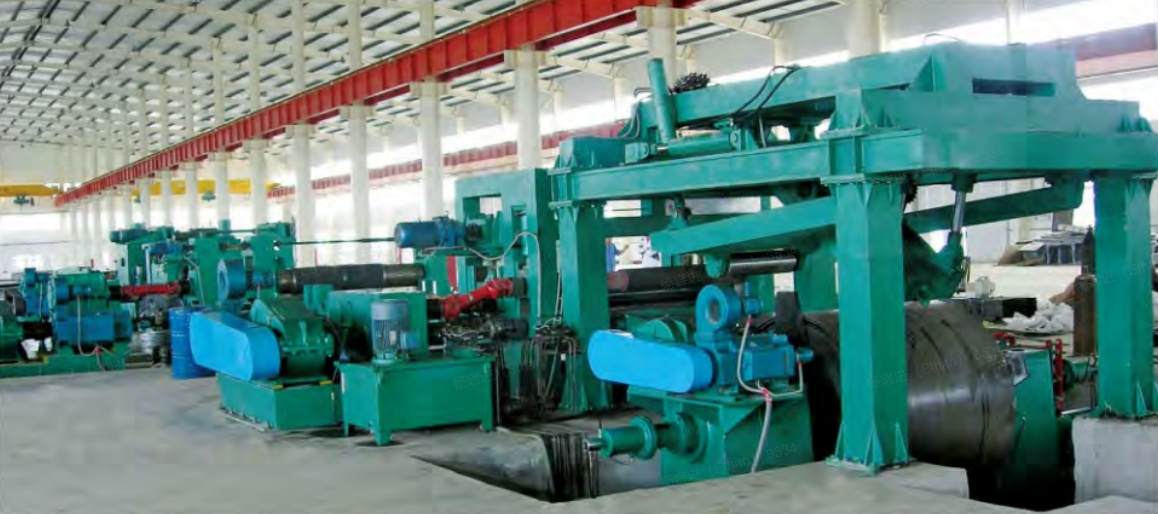
A steel coil slitting line is a metal slitting line designed to cut wide steel coils lengthwise into narrower strips. Unlike a standalone slitting machine, the full line includes coil loading, decoiling, strip guiding, slitting, scrap handling, tension control, and recoiling. That integration matters because strip width, burr height, flatness, and coil tightness are affected by more than the blade set alone.
In a hot rolled steel slitting line, the equipment must also handle thicker material, scale, coil memory, camber, and higher strip tension. The line therefore needs a stable decoiler, effective leveling or feeding, a rigid coil slitting machine section, and a recoiler that can build tight coils without telescoping or loose layers.
How a Coil Slitting and Recoiling Line Works
flowchart LR
    A[Coil loading] --> B[Decoiling and centering]
    B --> C[Leveling or controlled feeding]
    C --> D[Slitting with rotary knives]
    D --> E[Scrap edge handling]
    D --> F[Tension control]
    F --> G[Recoiling into narrow coils]
    G --> H[Inspection, unloading, and packing]
A coil slitting and recoiling line starts by loading the master coil onto the decoiler. The strip is centered and fed forward, then leveled or guided to reduce unstable movement before it reaches the slitter head. Rotary knives cut the coil into the required strip widths, while edge scrap is separated and the slit strips move through tension control before being rewound.
Public buyer and specification guides emphasize that throughput, knife setup, tolerance control, burr control, and recoiling quality should be evaluated together rather than as isolated machine features (MachineMatcher buyer guide). The practical reason is simple: a high-speed line still creates problems if knife clearance, strip support, tension, or recoiler setup are wrong. General operation references also describe the same decoiling, slitting, scrap handling, tension, and recoiling sequence (operation manual; process explainer).
Why Hot Rolled Coil Needs a Heavy Gauge Steel Slitting Line
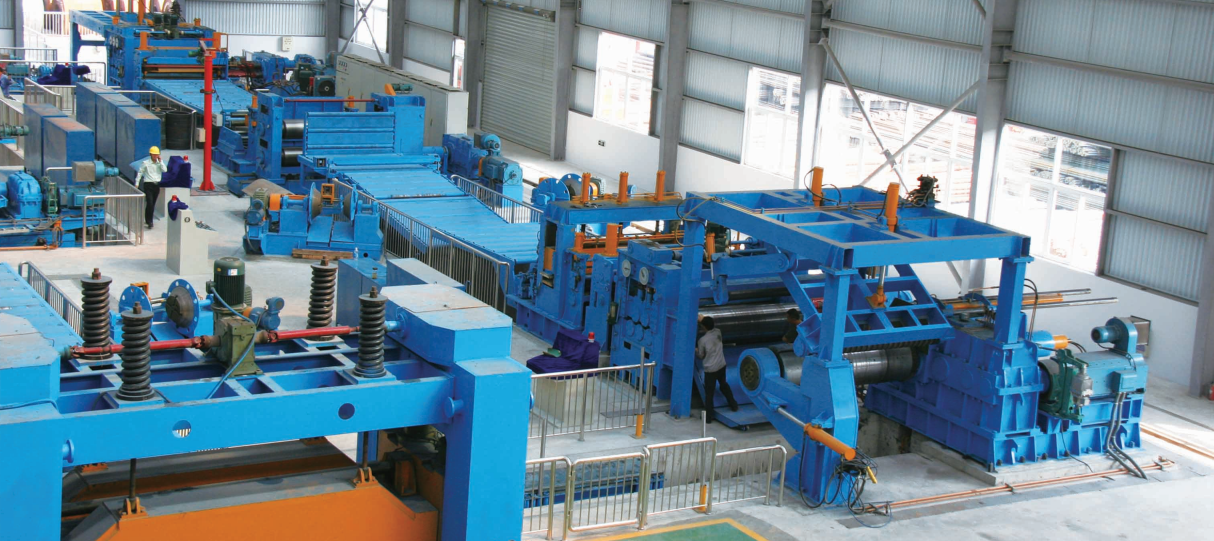
Hot rolled coil is often less forgiving than light-gauge material. It may have wave, camber, surface scale, and stronger coil memory. A heavy gauge steel slitting line should be configured around the buyer’s actual thickness range, coil width, coil weight, yield strength, target slit widths, and downstream use.
For suitable configurations, slit-width tolerance is commonly specified in sub-millimeter terms, but the final result depends on material behavior, knife setup, arbor rigidity, side guiding, strip support, and tension control. For this reason, a precision slitting line should be selected by the complete application, not by a headline speed value alone.
Key Equipment Sections in an Automatic Slitting Line
Decoiler and leveler
The decoiler supports the master coil, controls unwinding, and helps keep the strip centered. A leveler or controlled feeder then prepares the strip before slitting. For hot rolled coil, multi-roll leveling can help reduce wave, camber, and flatness variation before the strip reaches the knives.
Coil slitting machine / slitter head
The slitter head is the main cutting section of the line. Its performance depends on knife material, arbor rigidity, knife clearance, overlap, spacer accuracy, and setup repeatability. A coil slitting machine used inside an automatic line should allow controlled adjustment for different material thicknesses and strip widths.
Tension control and recoiler
After slitting, each strip must be recoiled cleanly. Controlled tension and recoiler setup help avoid loose coils, telescoping, uneven edges, and layer-to-layer scratching. This section is especially important when the steel strip slitting line is feeding downstream production that requires stable coil edges and predictable unwinding.
Quality Controls: Width Tolerance, Burrs, Flatness, and Coil Shape
The line should be judged by the quality of the finished coils, not only by whether the strip is cut. Four quality areas deserve special attention:
| Quality area | What to check | Why it matters |
|---|---|---|
| Width tolerance | Knife setup, spacers, arbor rigidity, strip guiding | Prevents assembly and downstream forming problems |
| Burr control | Knife clearance, overlap, blade condition, material thickness | Reduces safety risks and secondary deburring work |
| Flatness | Leveling, feeding stability, hot rolled coil condition | Helps welding, forming, painting, and fit-up |
| Coil shape | Tension control, recoiler alignment, strip support | Prevents loose layers, telescoping, and handling damage |
Burr control depends on knife clearance, overlap, tooling condition, material thickness, and how well the strip is supported through the slitter. Throughput also depends on more than motor power: coil specification, thickness, knife setup, automation level, changeover method, and inspection requirements all affect realistic output.
Buyer Pain Points the Right Steel Slitting Line Should Solve
The source production brief highlights six common buyer pain points: high labor dependence, inconsistent strip width, poor flatness, surface damage, burr problems, and quality variation between batches. A coordinated automatic slitting line addresses these problems by replacing separate manual steps with a continuous flow.
Automation can reduce manual handling and operator intervention compared with separate decoiling, leveling, cutting, and recoiling steps. Quick knife setup and stored parameters can shorten changeover for mixed-width orders. Proper guide rolls, descaling or cleaning where required, tension control, and careful material handling can also reduce surface damage and scrap risk.
For buyers, the main question is not simply “what is the equipment price?” A lower initial price may not help if the line cannot hold the required width range, produces excessive burrs, slows down changeovers, or recoils unstable finished coils.
What to Prepare Before Asking a Slitting Equipment Manufacturer
Before contacting a steel coil slitting line manufacturer, prepare a practical RFQ package. Specification references for slitting lines commonly point buyers toward mechanical, drive, cutting, tension, recoiling, and performance requirements (slitting line specification standard). At minimum, share:
– Material type: hot rolled steel, HRPO, cold rolled steel, galvanized steel, stainless steel, or other metal. – Thickness range, width range, coil inner diameter, outer diameter, and coil weight. – Yield strength or grade when available. – Target slit widths, number of strips, tolerance requirement, and burr expectation. – Required line speed, monthly throughput, changeover frequency, and order mix. – Downstream use: tube mill, roll forming, stamping, steel structure, appliance, automotive, or service-center resale. – Factory layout, power supply, crane capacity, safety expectations, and automation level.
These inputs help the supplier recommend the correct hot rolled coil slitting line instead of quoting a generic steel slitting machine that may not match the application. They also make the equipment proposal easier to compare across suppliers.
FAQ
What is coil slitting equipment?
A steel coil slitting line is an integrated system that cuts a wide steel coil into narrower strips and rewinds them into finished coils. It normally includes decoiling, guiding or leveling, rotary slitting, tension control, scrap handling, and recoiling.
How does a coil slitting and recoiling line work?
A coil slitting and recoiling line loads the master coil, unwinds and guides the strip, cuts it lengthwise with rotary knives, controls strip tension, separates scrap edges, and rewinds each slit strip into a coil for storage or downstream production.
What affects steel slitting line price?
Steel slitting line price depends on material thickness, coil width, coil weight, target tolerance, number of cuts, automation level, line speed, recoiler design, safety equipment, factory layout, and optional cleaning, leveling, or packing systems.
How can burrs be reduced in steel slitting?
Burrs can be reduced by matching knife clearance and overlap to material thickness, keeping knives sharp, supporting the strip properly, controlling tension, and inspecting edge quality after setup changes.
What specs should a buyer provide to a steel coil slitting line manufacturer?
A buyer should provide material grade, thickness range, coil width and weight, coil ID/OD, target slit widths, tolerance and burr requirements, production volume, changeover frequency, downstream application, available space, and desired automation level.
Conclusion
A steel coil slitting line is most valuable when it solves the full production problem: stable feeding, accurate slitting, controlled burrs, reliable recoiling, faster changeovers, and consistent finished coils. For hot rolled and heavy-gauge steel applications, buyers should evaluate the complete line configuration rather than focusing only on the slitter head or quoted speed.
If you are planning a slitting project for hot rolled coil, UBright can help review your material range, target strip widths, factory layout, automation needs, and downstream process requirements before you request a final equipment proposal.
References
- Slitting Lines Buyer’s Guide — Throughput, Knife Setup & Tolerance Control — Supports buyer evaluation factors for throughput, knife setup, tolerance control, burr control, and recoiling quality.
- Steel Coil Slitting Line Operation Manual — Supports setup, knives, PLC, production operation considerations, and the integrated slitting-line sequence.
- Slitting Line Specification Standard — Supports RFQ and specification requirements for slitting lines.
- How Does Steel Coil Slitting Line Work? — Supports the general process sequence for steel coil slitting lines.